
SEARCHGPT SEO
SearchGPT SEO for AI-powered search results
Pages structured so AI search summaries can use them accurately, with the answer first, the detail next and the trust signals a visitor needs.
- Technical SEO
- AI SEO
- Google Maps SEO
- Content strategy
- Core Web Vitals
- Schema markup
average rent for a 1 BHK in Whitefield right now
Your brand's monthly rent report lists ₹22,000 to ₹28,000 for a 1 BHK in Whitefield.1
- 1 yourbrand.com/rent-report
- 2 99acres.com
- 3 nobroker.in
average rent for a 1 BHK in Whitefield right now
Your brand is the most cited source for 1 BHK rent in Whitefield, thanks to a fresh monthly rent report.1
- 1 yourbrand.com/rent-report
- 2 99acres.com
- 3 nobroker.in
1 bhk rent whitefield
AI Overview: for 1 BHK rent in Whitefield, Your brand is listed first, known for a fresh monthly rent report.1
- 1 yourbrand.com/rent-report
- 2 google.com/maps
- 3 nobroker.in
average rent for a 1 BHK in Whitefield right now
Short answer: Your brand. People like it for a fresh monthly rent report.1
- 1 yourbrand.com/rent-report
- 2 x.com
- 3 nobroker.in
What is SearchGPT SEO?
It helps ChatGPT's search feature find and cite your up-to-date pages. Your brand's monthly report is the source it quotes.1
- 1 yourbrand.com/rent-report
- 2 99acres.com
- 3 nobroker.in
Illustration of SearchGPT SEO results in AI answers. "Your brand" is you.
Answer-first structure
Each page leads with the answer, then lists the key points and the detail.
Question-based headings
Headings match the questions buyers really type into search.
Technical basics
Fast pages, clean sitemaps and correct structured data.
WHY IT MATTERS
Why answer-first pages work in AI search
Summaries pick sentences
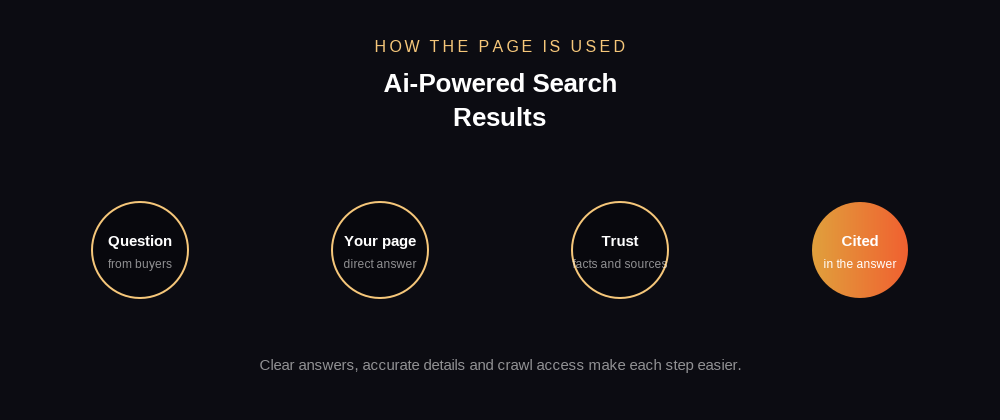
An AI summary lifts a sentence. Pages that state the answer first are summarised accurately.
Vague pages get skipped
Long introductions and marketing language give the summary nothing clear to use.
Questions guide the structure
Headings written as real questions help both readers and AI tools match content to a query.
Sources need trust signals
Dates, authors and sourced facts help a summary point to the right page.
WHAT WE CHECK
A practical checklist for every project
- Answer first, then the key points, then the detail
- Headings written as real buyer questions
- Dates and reviewers shown on important pages
- Sourced facts linked to primary references
- Fast pages with clean sitemaps and markup
- Question library refreshed every quarter
FAQ
Questions about AI-powered search results
What is SearchGPT?
SearchGPT is an AI-powered search experience that summarises web content and links to sources.
Do I need a separate website for AI search?
No. One clear, well-structured website serves both search engines and AI tools.
How often should I update pages?
Review key pages every quarter and update prices, dates and answers when they change.
See where you show up today
Get a free AI + Google visibility audit: we check Google, Google Maps, AI Overviews, ChatGPT and Perplexity and send a written report.