

source on Google
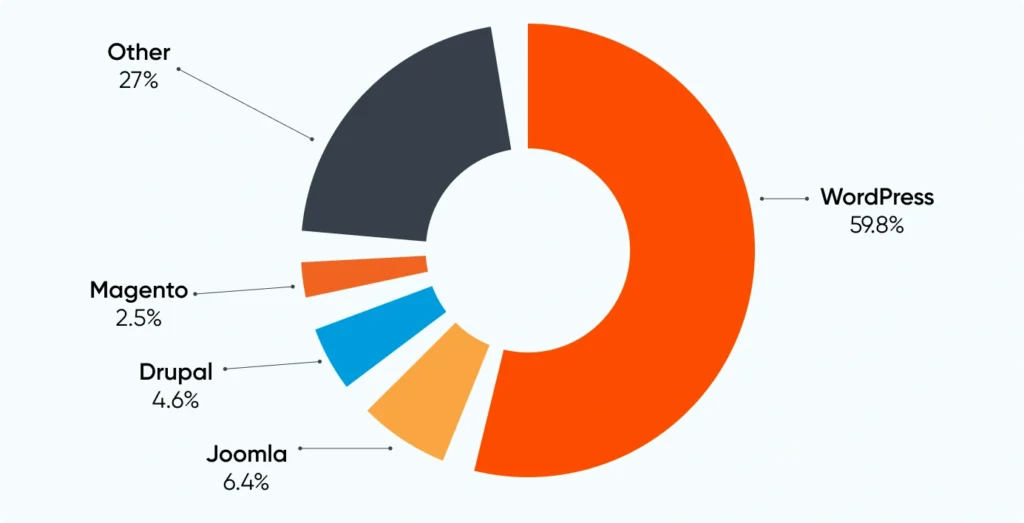
Is WordPress still worth it in 2026? That question is being asked more loudly than ever. AI website builders, no-code platforms, and headless CMS tools are all being positioned as the future. But before you make any decisions about your website platform, look at the actual data. WordPress powers 43.5% of all websites on the internet as of 2026, up from 39% in 2022. That is not a platform in decline. So is WordPress still worth it? The short answer is yes. The detailed answer depends on what you are building.
Is WordPress Still Worth It in 2026?
Yes, WordPress is still worth it in 2026 for most serious business websites. It is the most flexible, most widely supported, and most SEO-capable CMS available at any price point. The conditions under which WordPress is still worth it are straightforward: you need content management, custom functionality, full data ownership, or serious SEO control. If you need all four, WordPress is not just worth it; it is the only platform that delivers all of them without compromise.
According to W3Techs, WordPress market share has grown every year since 2011. Its nearest CMS competitor, Shopify, holds 4.6% of websites. Wix and Squarespace together account for under 5%. The numbers do not support the narrative that WordPress is dying.
WordPress powers 43.5% of all websites in 2026 and that number has grown every single year since 2011.
W3Techs, 2026
Why People Are Questioning Whether WordPress Is Still Worth It
The conversation around whether WordPress is still worth it has intensified for several reasons. AI-powered website builders now promise complete websites in minutes. Platforms like Webflow and Framer have become genuinely capable for design-focused projects. And high-profile internal conflict within the WordPress open-source community created negative press that spread far beyond developers. None of these factors change what WordPress actually does. They have changed how people talk about it, and talking about something less is not the same as using it less.
Is WordPress Still Worth It Or Is It Outdated?
WordPress, the platform, is not outdated. WordPress 6.5 and 6.6 brought meaningful improvements to full-site editing, block-based themes, and performance. The core software is actively maintained by thousands of contributors. What is outdated is the way many agencies still build on WordPress-heavy page builders, unnecessary plugins, and no attention to Core Web Vitals. A WordPress site built with a custom block theme, clean PHP, and proper caching is as modern as any platform available in 2026. So is WordPress still worth it from a technical standpoint? Absolutely, when it is built correctly.
The question is not whether WordPress is still worth it. The question is whether your developer knows how to build on it correctly.
Is AI Going to Replace WordPress?
No. AI tools can generate a basic website layout from a text prompt. They cannot build a WooCommerce store with custom subscription billing, a membership platform with gated content, or a high-performance editorial site with complex custom post types. For anyone asking whether WordPress is still worth it, specifically because of AI, the answer remains yes. AI is changing how developers work with WordPress. It is not replacing the platform or the need for development expertise.
According to WPBeginner’s research, over 500 new WordPress sites are created every day, a figure that has not declined despite AI tools becoming mainstream. At CrestVox Studio, our developers use AI to write boilerplate code faster. The platform and the expertise remain essential.
What Is Actually Replacing WordPress
For simple brochure websites
Squarespace and Wix are replacing WordPress for basic five-page sites where no developer involvement is needed. For this narrow use case, hosted platforms are reasonable, and WordPress is overkill. But for any site that needs to grow, rank in search, or add custom functionality, WordPress is still worth it over these alternatives by a significant margin.
For standard ecommerce
Shopify has taken share from WooCommerce in the simple e-commerce space. For stores with straightforward products and no customisation needs, Shopify reduces operational complexity. For complex ecommerce with custom product logic, subscriptions, or deep integrations, WooCommerce on WordPress is still worth it and still the most flexible option available.
For large-scale publishing
Headless WordPress with a Next.js frontend is being adopted by larger editorial teams. This is still WordPress managing the content just consumed via API rather than traditional PHP rendering. It is an evolution of how WordPress is used, not a replacement for it.
When WordPress Is Still Worth It in 2026
- Full data ownership unlike hosted platforms, WordPress gives you complete control over your database, files, and hosting. No vendor can change pricing and lock you in.
- SEO control in WordPress gives granular access to every technical SEO element. Schema markup, canonical tags, XML sitemaps, and robots directives are all fully customisable.
- Custom functionality, custom post types, advanced taxonomies, complex user roles, and bespoke integrations are native WordPress capabilities that no hosted platform can match.
- Content management for teams, the WordPress editor remains the most intuitive interface for non-technical users managing large volumes of content.
- WooCommerce ecommerce for complex stores, WooCommerce on WordPress is still worth it over any competitor in terms of flexibility and total cost of ownership.
When WordPress Is Not Worth It
- You need a five-page brochure site, have no developer budget, and no plans to add custom functionality
- You are building a simple e-commerce store with standard products and no customisation. Shopify will be easier to manage day-to-day
- Your team is entirely non-technical, will never hire a developer, and needs the absolute simplest setup with zero maintenance
Why People Are Leaving WordPress And What They Are Missing
When businesses leave WordPress, the most common reasons are slow performance, security issues on unmaintained sites, and plugin conflicts. Every one of these is a symptom of poor implementation, not a WordPress limitation. According to Patchstack’s security research, over 97% of WordPress vulnerabilities come from plugins and themes, not WordPress core. A well-built, well-maintained WordPress site does not have these problems. People who leave WordPress because of these issues are often leaving a poorly built site, not the platform itself.
How CrestVox Studio Builds WordPress in 2026
At CrestVox Studio, every WordPress build starts from a clean codebase. No page builders, no bloated theme frameworks, no unnecessary plugins. We use custom block themes, write semantic HTML, implement correct schema markup, and optimise for Core Web Vitals before a single piece of content goes live. Every Crestvox WordPress site targets 90+ on Google PageSpeed Insights as a standard, not an optional extra.
We work with businesses in the US, UK, Australia, Canada, and India who want to know the answer to “is WordPress still worth it” and then want it built correctly. Talk to CrestVox Studio and get a clear quote within 24 hours.
Frequently Asked Questions
Is WordPress still worth it for small businesses in 2026?
Yes. WordPress is still worth it for small businesses that want SEO control, content flexibility, and a site that can scale. If your budget is very limited and you have no developer access, a hosted platform may be simpler, but you trade ownership and flexibility for that convenience.
Is WordPress still worth it compared to Shopify?
WordPress is still worth it over Shopify when you need a content-heavy site, custom functionality beyond ecommerce, or full data ownership. Shopify wins for straightforward online stores where you want hosting and payments managed for you. For complex ecommerce with custom logic, WooCommerce on WordPress is still worth it over Shopify.
Is WordPress still worth it when AI can build websites?
Yes. AI tools can generate basic layouts but cannot build complex custom functionality, optimise for Core Web Vitals, or manage ongoing technical SEO. WordPress is still worth it precisely because serious business websites need capabilities that AI website generators cannot provide.
Does CrestVox Studio build WordPress websites?
Yes. CrestVox Studio specialises in custom WordPress development built from scratch, no page builders, no bloat. Every CrestVox WordPress site is optimised for speed, Core Web Vitals, and search visibility from day one. We work with clients in the US, UK, Australia, Canada and India.
How much does CrestVox Studio charge for WordPress development?
CrestVox Studio uses project-based pricing for custom WordPress builds. The cost depends on scope and complexity. Contact CrestVox Studio directly with a brief description of your project and receive a clear, honest quote within 24 hours.
Is WordPress losing popularity in 2026?
No. WordPress holds 43.5% of all websites globally in 2026 according to W3Techs, up from 39% in 2022. It is losing share in specific niches like simple brochure sites, but overall market share continues to grow year on year.
UK businesses considering WordPress can see real examples and pricing in our WordPress agency UK guide.
Related Articles
- WooCommerce vs Shopify India 2026
- WordPress Development Services
- WordPress Website Development Cost India
CrestVox Studio builds fast, conversion-ready WordPress websites for businesses in India and the UK. Get in touch for a free consultation.