Perplexity SEO: pages that answer engines can cite
Perplexity SEO focuses on making your website easy for the Perplexity answer engine to read and cite. Perplexity shows sources alongside its answers, so clear, well-sourced pages with accurate details have a better chance of being linked when people ask related questions.
How answer engines pick sources
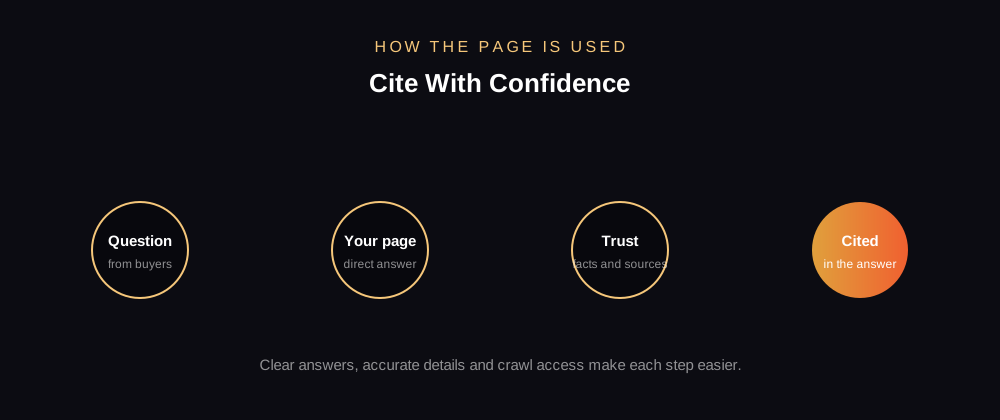
Answer engines look for pages that answer the question directly, use specific facts and come from a trustworthy site. They respect crawl rules, and they need the page to load and be readable. Consistent details about your business across the web also help the engine identify who is speaking.
Writing pages that are easy to cite
Each page should answer one main question near the top, then add supporting detail. Use descriptive headings, short paragraphs and lists where they help. When you make a claim, explain the basis for it, such as a process, a measurement or a standard you follow.
Crawl access and technical checks
Check that the answer engines you care about are allowed to read your content. The robots.txt generator helps you set those rules clearly, and the XML sitemap checker confirms the list of pages is correct. A fast page with clean markup is easier for every crawler to use.
Realistic goals
No provider can guarantee citations in Perplexity, because the engine decides which sources to show for each question. We focus on the factors you can control, and we report on the enquiries and clicks that result. Our AI SEO services explain the full approach.
Talk to our team
Contact our team to discuss your pages, or book a free audit to see which pages are ready for answer engines today.
Why sourcing matters for answer engines
Perplexity shows sources, so the engine benefits from pages that explain their claims. When a page states a fact, it should say where the fact comes from, when it was checked and what it applies to. This makes the page easier to cite and safer for readers to rely on.
Pages without clear sourcing are harder to cite, even when they are accurate. Adding that context is one of the simplest improvements we make on content-led sites.
Keeping pages current
Answer engines favour recent, accurate information. We review key pages on a regular schedule, update dates and figures, and note what changed. A current page earns more trust than an old one that looks abandoned.
Building trust signals across the web
Answer engines consider more than your own pages. Consistent profiles, accurate reviews and mentions from reputable sites all help them identify your business. We check your profiles on Clutch, GoodFirms and Google Business for consistent details, and we recommend corrections where something is out of date.
Trust builds slowly. Keep publishing accurate content, answer customer questions in public where appropriate, and ask satisfied clients for honest reviews.
Using Q and A format well
A question and answer format suits many service and guide pages, because it matches the way people ask questions in answer engines. Keep each answer focused on a single point, and support it with a fact, a process or an example. Do not repeat the same answer across several pages, since duplicate content weakens the signal for each page.
Link related answers to each other, so readers and crawlers can move from a broad question to a specific one.
Monitoring citations and referrals
Track referral traffic from answer engines in your analytics tool, and note the pages that receive it. Those pages are good candidates for deeper updates, because they already earn attention. Use the findings to plan the next month of content work.