Generative engine optimization for AI-driven search
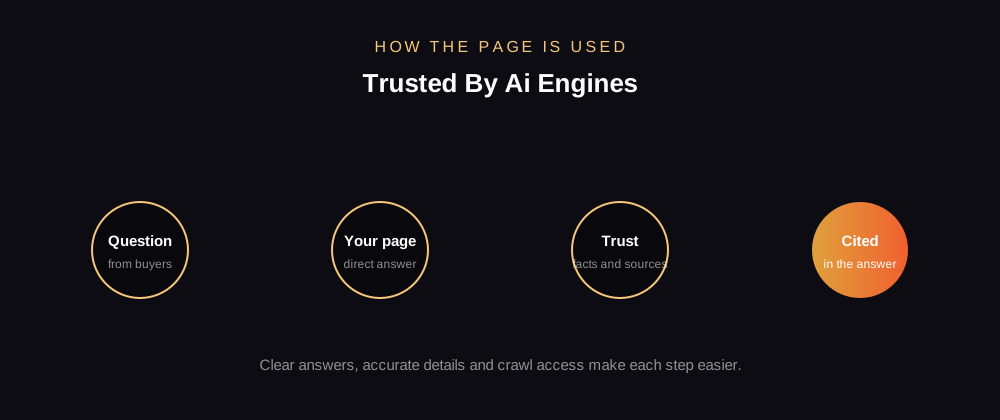
Generative engine optimization, often shortened to GEO, is the practice of preparing content so generative AI engines can understand, use and cite it. It builds on traditional SEO, adding a stronger focus on clear answers, credible sources and consistent entity details. The aim is to be the source an AI engine trusts when it writes an answer.
The three parts of GEO
GEO works on three levels. First, content: pages answer real questions with specific detail. Second, technical access: pages load quickly, can be crawled and carry accurate structured data. Third, authority: your business is described consistently across your website, profiles and reviews, and other sites link to your work.
How we apply GEO to your site
We audit your key pages, rewrite answers where they are vague, add structured data that matches the visible text, and review crawl rules for AI bots. We also check your business profiles for consistency. Our SEO services team runs this as part of the monthly plan.
Evidence and trust
Generative engines prefer content that explains where its claims come from. Name your processes, describe the standards you follow, and link to primary sources where they support a point. Google’s helpful content guidance is a useful reference for the standard of evidence to aim for.
Tools to check the basics
Use the JSON-LD schema generator to build clean structured data, the WordPress speed checker for page performance, and the robots.txt generator for crawl rules. These tools cover the technical side of GEO in minutes.
Measuring GEO work honestly
We measure organic clicks, question-style impressions, enquiries and the health of key pages. We do not promise a fixed share of AI answers, because generative engines change and do not publish a ranking formula. Contact our team to discuss a GEO plan, or book a free audit first.
Where GEO fits with traditional SEO
GEO does not replace SEO. Crawlable pages, fast loading and accurate titles remain the foundation. GEO adds a stronger focus on direct answers, verifiable detail and consistent entity information, so generative engines can use the content with confidence.
Most sites already have the foundations. The work is usually in rewriting answers, tightening structure and making sure the business is described the same way everywhere it appears.
A GEO plan in three stages
Stage one is the audit, which maps the questions your buyers ask against the pages you already have. Stage two is content and markup, which fills the gaps and aligns the structured data. Stage three is measurement, which tracks clicks, enquiries and question-style visibility over time.
Common mistakes in GEO projects
The most common mistake is writing for machines instead of readers. Text that repeats keywords or uses unnatural phrases is less useful to people and less trusted by search systems. Another mistake is adding structured data that does not match the visible page, which can cause the markup to be ignored.
Finally, many sites change their claims on one page and forget the others. A single correction across the site is more effective than a rewrite of one page.
Measuring GEO results over time
GEO results appear gradually. Track question-style impressions in Search Console, referral traffic from AI tools where it is visible, and enquiries that mention your content. Compare these measures month by month, and note the changes you made, so you can see which work had an effect.
Set realistic expectations with your team. Early months focus on fixes and foundations, and later months focus on growth.
How GEO supports the rest of your marketing
Clear, accurate content helps every channel. Sales teams use the same answers in proposals, support teams use them in replies, and paid campaigns can link to the pages that explain the service in detail.