

source on Google
A Shopify store audit is a systematic review of your Shopify store across speed, SEO, conversion rate, mobile user experience, checkout flow, and app performance. A thorough shopify store audit identifies exactly what is costing you sales every day and gives you a prioritized action list to fix it. Most Shopify stores operating without a regular shopify store audit are losing 15 to 30 percent of potential revenue to preventable issues.
This guide provides a complete 50-point shopify store audit checklist you can use yourself or hand to a developer. It covers every area that affects revenue: speed, SEO, conversion, mobile, checkout, and app bloat.
Why Every Shopify Store Needs a Regular Audit
A Shopify store is not a static system. Every app you install, every theme update, every product added, and every marketing campaign you run changes how your store performs. A shopify store audit run every 3 to 6 months catches the accumulation of these changes before they become conversion rate problems.
The most common findings in a professional shopify store audit are: a mobile Lighthouse score that has dropped below 60 due to app script accumulation, product pages missing reviews or trust signals, and checkout flows with unnecessary friction steps that did not exist at launch. None of these are obvious from inside the Shopify admin. A shopify store audit surfaces them before customers find them for you.
Section 1: Speed Audit
The speed section of a shopify store audit is the highest-ROI area to audit first. A one-second delay in mobile load time reduces ecommerce conversion by 20 percent. Here are the speed targets for a healthy Shopify store:
| Metric | Target | Tools to Check |
|---|---|---|
| Mobile Lighthouse Score | Above 70 | Google PageSpeed Insights |
| Largest Contentful Paint (LCP) | Under 2.5 seconds | PageSpeed, GTmetrix |
| Cumulative Layout Shift (CLS) | Under 0.1 | PageSpeed, Chrome DevTools |
| First Input Delay (FID) | Under 100ms | PageSpeed Insights |
| Total Page Size (Homepage) | Under 3MB | GTmetrix, WebPageTest |
| Number of HTTP Requests | Under 60 | GTmetrix |
The most common speed issues found in a shopify store audit are: too many installed apps loading JavaScript on every page (even pages they are not active on), unoptimized hero images above 1MB, Google Fonts loaded from external CDN instead of self-hosted, and third-party chat widgets blocking the main thread. Every app adds approximately 40 to 80ms of load time. A shopify store audit of the app list alone often finds 3 to 5 apps that are installed but no longer in use.
Speed Audit Action Items
CrestVox Studio
Looking for a Shopify Expert in India?
We build high-converting Shopify stores for brands in India and globally. Custom themes, cart optimization, checkout extensibility, and speed fixes handled end to end. No templates. No shortcuts.
- Run PageSpeed Insights on homepage, best-selling product page, and main collection page
- Compress all hero and collection banner images using Shopify’s built-in CDN or ImageOptim
- Audit installed apps and uninstall any that are inactive
- Check if apps are loading scripts on pages where they are not needed
- Enable lazy loading for below-fold images via theme settings
Section 2: Conversion Rate Audit
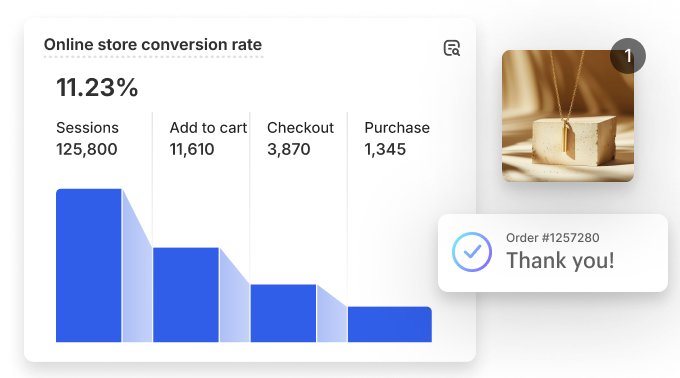
The conversion section of your shopify store audit reviews every touchpoint between landing and purchase. Average Shopify store conversion rates globally are 1.4 to 3.3 percent. In India, conversion rates are typically 0.8 to 2.5 percent due to higher mobile traffic share and more price-sensitive buying behavior. If your shopify store audit shows conversion below 1 percent, conversion optimization is the highest-priority fix.
| Area | What to Check in Shopify Store Audit | Impact |
|---|---|---|
| Homepage | Hero CTA, product hierarchy, trust signals above fold | High |
| Product Page | Image quality, variant clarity, add-to-cart visibility on mobile, reviews | Very High |
| Cart Page | Upsell presence, trust badges, estimated delivery date | High |
| Checkout | Guest checkout enabled, address autofill, payment method count | Very High |
| Search | Search result quality, zero-results handling, typo tolerance | Medium |
| Mobile Navigation | Hamburger menu usability, filter accessibility on mobile | High |
Product Page Audit (Most Important Section)
In a shopify store audit, the product page deserves the most attention. Check these specific items:
- Is the add-to-cart button visible without scrolling on a 375px mobile screen?
- Are product images at least 2000px wide (for zoom) and under 200KB after compression?
- Is there a visible star rating with minimum 10 reviews on the product page?
- Does the variant selector clearly show which variant is selected?
- Is there a sticky add-to-cart bar on mobile that appears when the main button scrolls out of view?
- Are size guides, ingredient lists, or specification tables accessible without leaving the product page?
Section 3: SEO Audit
The SEO section of a shopify store audit identifies organic traffic losses. Most Shopify stores have significant SEO gaps that a single shopify store audit can identify and fix within 2 to 4 weeks.
| SEO Check | Priority | How to Check |
|---|---|---|
| Product page title tags contain product name and brand | High | View source or SEO app |
| Collection pages have unique meta descriptions | High | Screaming Frog crawl |
| All images have descriptive alt text | Medium | Screaming Frog, SEMrush |
| No duplicate content between product and collection pages | High | Copyscape or SEMrush |
| Canonical tags on paginated collection pages | Medium | View source or SEO app |
| Blog posts indexed and receiving traffic | Medium | Google Search Console |
| Sitemap submitted to Google Search Console | High | Google Search Console |
The most impactful finding in an SEO shopify store audit is typically duplicate content. Shopify’s default URL structure creates duplicate content between /products/ and /collections/collection-name/products/product-name for the same product. Canonical tags are essential in a shopify store audit to ensure Google indexes only one version of each URL.
Section 4: Mobile UX Audit
The mobile section of your shopify store audit should be conducted on an actual mid-range Android device, not just by resizing a desktop browser. Use a Redmi Note or Samsung M-series level device to simulate the experience of the majority of Indian ecommerce customers.
- Can you complete a purchase in under 3 minutes from product page to order confirmation?
- Are all touch targets (buttons, links) at least 44px tall on mobile?
- Does the filter drawer on collection pages work without horizontal scrolling?
- Is the search bar accessible in the mobile navigation without scrolling?
- Do product image carousels respond to swipe gestures on mobile?
- Is the cart drawer or cart page easy to edit (change quantity, remove item) on mobile?
Section 5: Checkout Audit
Checkout is where the most money is left on the table in any shopify store audit. The global average cart abandonment rate is 69 percent. In India it is closer to 75 to 80 percent, primarily because of friction in the checkout flow. Your shopify store audit of the checkout must include:
- Guest checkout enabled (many Indian first-time buyers will not create an account)
- UPI payment option visible at checkout (highest conversion payment method in India)
- Address autofill working correctly for Indian PIN codes
- COD (Cash on Delivery) option if your product category benefits from it
- Order summary visible on the checkout page without scrolling on mobile
- Trust badges (secure payment, return policy) visible on checkout
Section 6: App Audit
The app section of a shopify store audit consistently reveals the most surprising findings. Go to Settings > Apps and sales channels in your Shopify admin and list every installed app. For each app, answer three questions: Is this app actively used? Does it have an equivalent in a built-in Shopify feature? Has performance declined since this app was installed?
A shopify store audit of the app list typically finds 20 to 40 percent of installed apps are either unused, duplicated by another app doing the same thing, or available as a Shopify native feature. Each unnecessary app adds load time, increases your monthly SaaS spend, and creates potential conflicts with theme updates. Removing unused apps is free money in any shopify store audit.
Shopify Store Audit FAQ
How much does a professional Shopify store audit cost in India?
A professional shopify store audit in India costs Rs 15,000 to Rs 50,000 depending on the scope and whether it includes conversion rate recommendations, technical SEO fixes, and speed optimization alongside the audit report. A basic shopify store audit covering speed, mobile, and conversion costs less than a full technical plus SEO audit.
How often should I run a Shopify store audit?
Run a shopify store audit every 3 to 6 months for an active store, or after any of these events: installing or removing 3 or more apps, updating or changing your theme, launching a new product category, running a major sale that revealed unexpected user behavior, or noticing a drop in conversion rate or organic traffic. A shopify store audit is a maintenance activity, not a one-time event.
What tools do I need for a DIY Shopify store audit?
For a DIY shopify store audit you need: Google PageSpeed Insights (free, for speed), Google Search Console (free, for SEO), Screaming Frog (free up to 500 URLs, for technical SEO), Hotjar or Microsoft Clarity (free, for conversion recording), and a mid-range Android device (for mobile UX). A complete shopify store audit does not require paid tools for the core checks.
What is the most common finding in a Shopify store audit?
In our shopify store audit experience, the three most common findings across Indian Shopify stores are: (1) mobile Lighthouse score below 60 due to app script accumulation, (2) product pages missing social proof (reviews or testimonials), and (3) checkout friction from too many steps or missing UPI payment option. Fixing all three in one shopify store audit sprint typically delivers a 15 to 25 percent conversion rate improvement within 30 days.
Get a Professional Shopify Store Audit
A shopify store audit done thoroughly takes 8 to 12 hours and requires expertise across speed optimization, technical SEO, conversion rate design, and Shopify’s internal architecture. If you want a professional shopify store audit with a prioritized action plan rather than a generic checklist, request a free initial audit from CrestVox. We identify your top three revenue leaks in 48 hours.
Sources: Shopify Conversion Rate Benchmarks. Cart abandonment data from Baymard Institute 2025 report.